| Name | Carbon monoxide |
| Formula | CO |
| IUPAC name | carbon monoxide |
| CAS number | 630-08-0 |
| EC number | 211-128-3 |
| UN number | 1016 — Carbon monoxide, compressed |
| Transport class (ADR/RID) | 2.3 (Toxic gases) |
| PubChem CID | 281 |
| Synonyms | Carbon oxide, Flue gas, Monoxide |
| Molar mass | 28.01 g/mol |
| Boiling point (1 atm) | -191.5 °C |
| Melting point | -205.07 °C |
| Critical temperature | -140.2 °C |
| Critical pressure | 34.99 bar |
| Vapour pressure | — |
| Gas density | 1.2506 kg/m³ (0 °C, 1013 mbar) |
| Relative density (air = 1) | 0.97 |
| Solubility in water | 35,5 ml/l at 0 °C |
| Appearance | compressed gas, colourless, odourless |
| Odour | odourless |
| 1 ppm at 20 °C | 1.16 mg/m³ |
Boiling point -191.5 °C at 1 atm: a gas at all normal conditions. Critical point -140.2 °C / 34.99 bar: above this temperature it cannot be liquefied by pressure alone — cylinders hold a compressed gas. Relative density 0.97 (air = 1): about as dense as air — mixes readily; sensor height follows the source. Conversion at 20 °C, 1013 mbar: 1 ppm = 1.16 mg/m³; NDIR reads partial pressure, so readings scale with absolute pressure (value = reading × P/1013) and must be pressure-compensated.
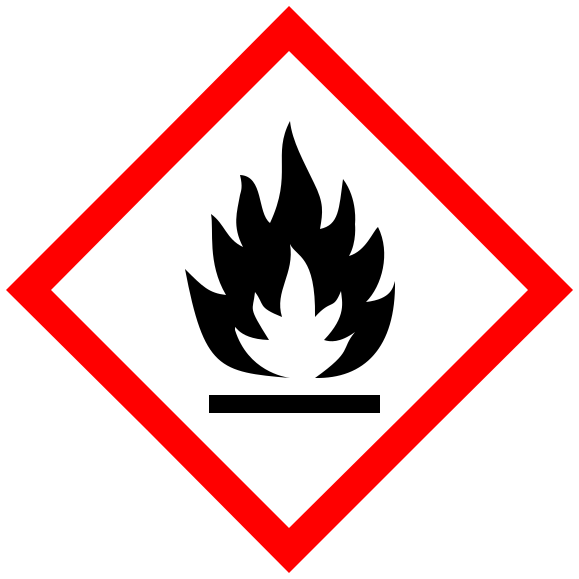
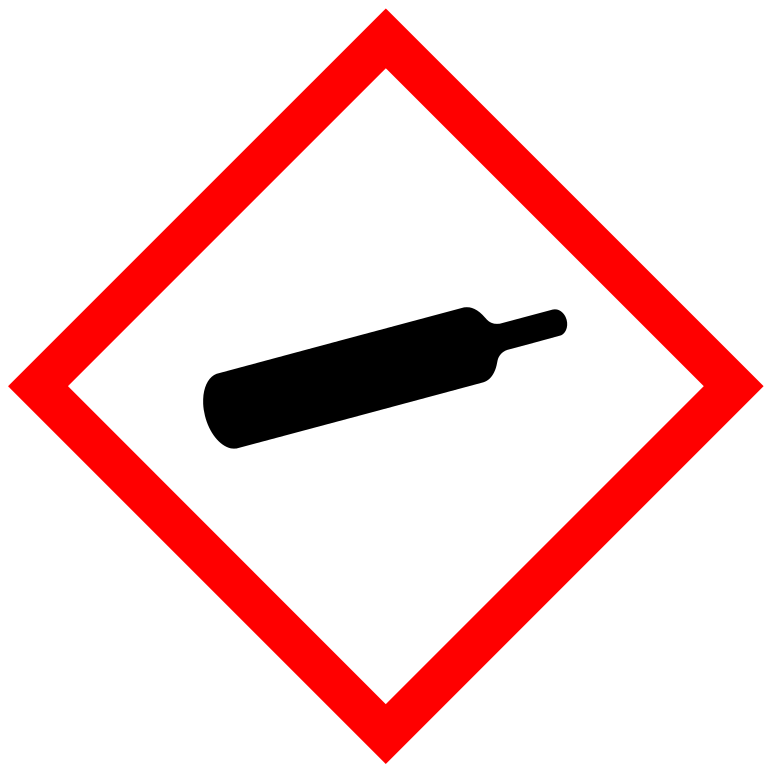
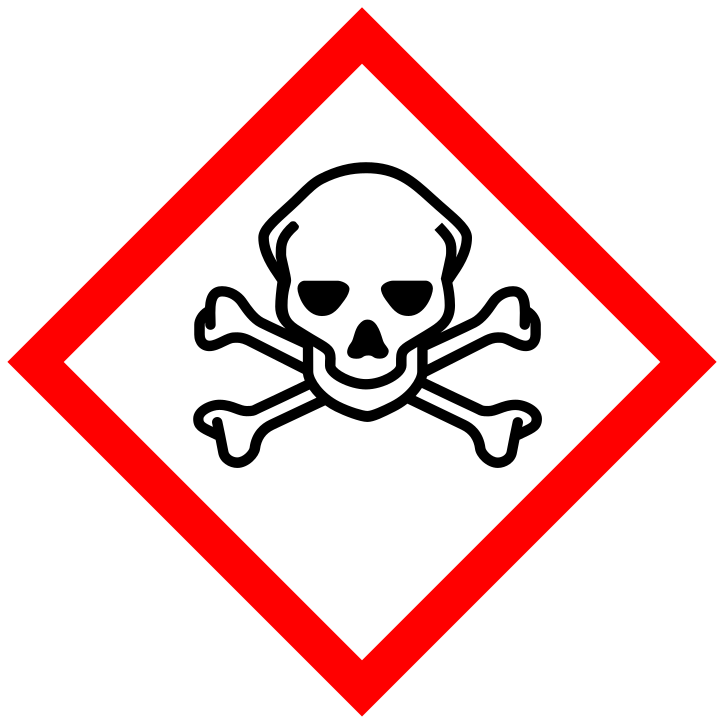
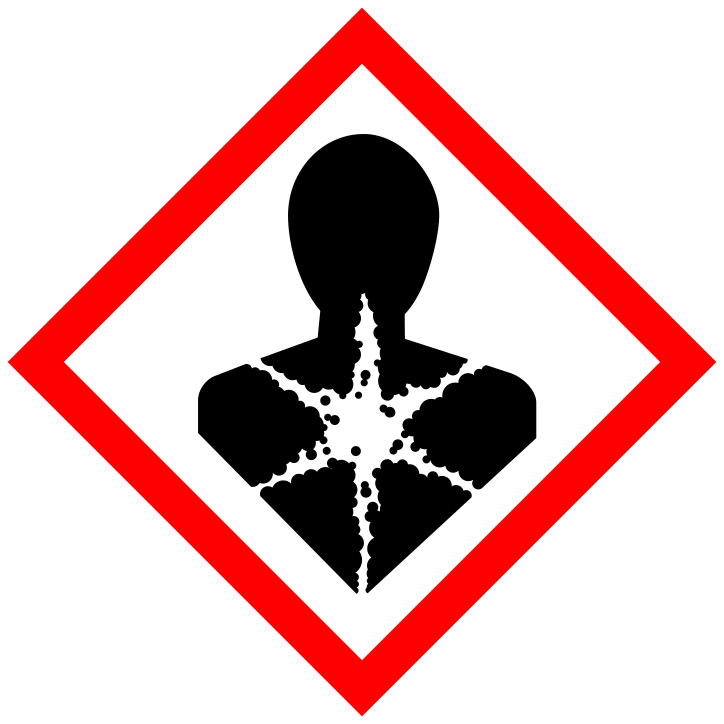
| Hazard class | toxic + flammable |
| GHS signal word | Danger |
| CLP classification | Flammable gases, Category 1; H220 Gases under pressure, compressed gas; H280 Acute toxicity, Category 3, inhalation; H331 Reproductive toxicity, Category 1A; H360D Specific Target Organ Toxicity (repeated exposure), Category 1; H372 |
| Hazard statements | H220: Extremely flammable gas. H280: Contains gas under pressure; may explode if heated. H331: Toxic if inhaled. H360D: May damage the unborn child. H372: Causes damage to organs through prolonged or repeated exposure. |
| Lower / upper explosion limit | 11.3 vol% / 75.6 vol% |
| Auto-ignition temperature | 605 °C · T1 · group IIA |
| Seveso III named substance | yes |
| EU indicative OELV (8 h TWA) | 20 ppm · 23 mg/m³ — Directive 2022/431/EU |
| EU IOELV short-term (15 min) | 100 ppm · 117 mg/m³ |
| Germany AGW (TRGS 900) | 20 ppm · 23 mg/m³ |
| Netherlands | wettelijke grenswaarde per Arboregeling bijlage XIII — SER grenswaarden database |
| NIOSH REL (USA) | TWA 35 ppm (40 mg/m3) C 200 ppm (229 mg/m3) |
| OSHA PEL (USA) | TWA 50 ppm (55 mg/m3) See Appendix G |
| IDLH | 1200 ppm |
Binds haemoglobin ~200× stronger than O₂ (COHb), starving tissues of oxygen. Odourless and colourless: headache and nausea at 100–200 ppm over hours, confusion and collapse above ~1000 ppm, death from ~1 % (10 000 ppm) within minutes. Flammable 11–75 vol%.
- Electrochemical cells dominate workplace CO detection (ppm range); NDIR at 4.6 µm is used for flue-gas/CEMS and process % ranges where EC cells saturate or drift.
- Alarms typically 30 ppm (pre) / 60 ppm (main) for occupied areas; garages per EN 50545.
| GWP₁₀₀ — IPCC AR6 | — |
| GWP₁₀₀ — IPCC AR4 | — |
| GWP used in Reg. (EU) 2024/573 | not listed |
| Atmospheric lifetime | — |
| Ozone depletion potential | 0 |
| Main IR absorption band (NDIR) | 4.6–4.7 µm (fundamental, 2143 cm⁻¹) |
- IED 2024/1785 — CEMS on combustion plants (EN 14181 QAL)
- Workplace: EU IOELV 20 ppm / STEL 100 ppm (Dir. 2017/164/EU)
- EN 50291 (domestic) / EN 50545 (car parks) detector standards
Tell us what you measure — just tap
Three taps and an email. An engineer replies within 24 h with feasibility and a price indication.
- https://gestis-database.dguv.de/data?name=001110
- https://www.cdc.gov/niosh/npg/npgd0105.html
- https://pubchem.ncbi.nlm.nih.gov/compound/281
- IPCC AR6 WG1 Ch.7 Supplementary Material, Table 7.SM.7 (https://www.ipcc.ch/report/ar6/wg1/downloads/report/IPCC_AR6_WGI_Chapter07_SM.pdf)
- HITRAN/NIST IR band positions (approximate centre of the strongest band used for NDIR; https://hitran.org, https://webbook.nist.gov)