Boiling point -48.1 °C at 1 atm: a liquefied gas under its own vapour pressure in cylinders. Critical point 66.2 °C / 36.3 bar: below this temperature it can be stored as a liquid; cylinder pressure then equals the vapour pressure. Vapour pressure ≈ 12.7 bar at 25 °C — this is the pressure inside a cylinder or a switchgear compartment at that temperature, and it rises steeply with temperature (Clausius–Clapeyron). Relative density 1.21 (air = 1): heavier than air — accumulates in pits, cable basements and at floor level; place sensors low. Conversion at 20 °C, 1013 mbar: 1 ppm = 4.99 mg/m³; NDIR reads partial pressure, so readings scale with absolute pressure (value = reading × P/1013) and must be pressure-compensated.
// Non-combustible gas., Only slightly soluble in water., Gas is heavier than air.
Hazards & safety
NFPA 704
health · flammability · instability · special
GHS / CLP pictograms
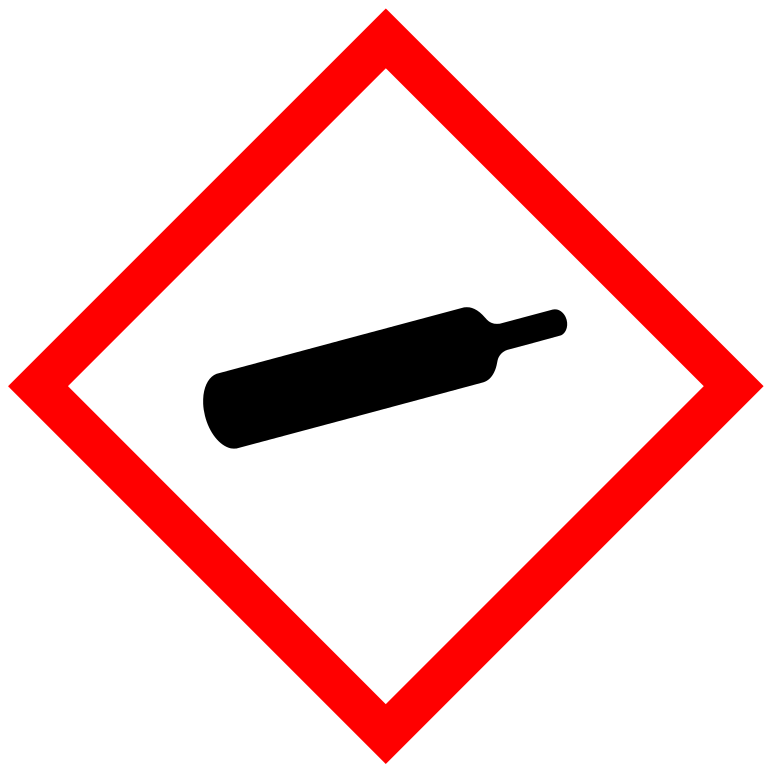
GHS04 · Gas under pressure
Hazard class
asphyxiant; greenhouse gas (F-gas Annex I)
GHS signal word
Warning
CLP classification
Gases under pressure, compressed gas; H280
Hazard statements
H280: Contains gas under pressure; may explode if heated.
// Limits change: always confirm the current national value before setting an alarm. Values above were read from the EU directives / GESTIS / NIOSH pages listed in Sources.
Effect on people
Low toxicity, asphyxiant; cardiac sensitisation at high %. Decomposes in flames to HF/COF₂. Heavier than air.
Recommended monitoring
NDIR (8.5–9 µm) refrigerant leak monitoring; component of R-410A/R-404A/R-407C blends — F-gas leak-check obligations apply per Reg. 2024/573 Art. 4/5.
Alarm 500–1000 ppm in machine rooms; floor-level sampling.
Climate & atmosphere
GWP₁₀₀ — IPCC AR6
3740
GWP₁₀₀ — IPCC AR4
3500
GWP used in Reg. (EU) 2024/573
3500
Atmospheric lifetime
30 years
Ozone depletion potential
0
Main IR absorption band (NDIR)
8.5–9.0 µm (C–F stretch); 7.0–9.5 µm region
Regulation windows
F-gas 2024/573 Annex I (GWP 3500) — component of R-410A/R-404A; leak-check and leak-detection obligations
HITRAN/NIST IR band positions (approximate centre of the strongest band used for NDIR; https://hitran.org, https://webbook.nist.gov)
PubChem CID 9633 (HSDB: vapour pressure 9501 mmHg at 25 °C); critical point 66.1 °C / 36.29 bar per NIST Chemistry WebBook (https://webbook.nist.gov/cgi/cbook.cgi?ID=C354336&Mask=4)
// Data compiled 2026-09-17 from the listed primary sources; null values were left blank rather than estimated.