Not toxic in the classic sense but physiologically active: above ~1 vol% (10 000 ppm) breathing rate rises; 3–5 % causes headache, dizziness, acidosis; above ~8–10 % loss of consciousness within minutes; >20 % rapidly fatal. asphyxiant (simple asphyxiant at high %, physiological effects from ~1 vol%).
Carbonic acid gas, Dry ice [Note: Normal constituent of air (about 300 ppm)].
Physical & chemical properties
Molar mass
44.01 g/mol
Boiling point (1 atm)
sublimes at -78.5 °C
Melting point
—
Critical temperature
31 °C
Critical pressure
73.83 bar
Vapour pressure
45.1 bar at 10 °C
Gas density
1.9767 kg/m³ (0 °C, 1013 mbar)
Relative density (air = 1)
1.53
Solubility in water
Concentration: 2 g/l
Appearance
gas liquefied under pressure, colourless, odourless
Odour
odourless
1 ppm at 20 °C
1.83 mg/m³
Behaviour with temperature and pressure
At atmospheric pressure CO₂ does not boil — it sublimes at -78.5 °C (solid ↔ gas); a liquid phase exists only above the triple-point pressure. Critical point 31 °C / 73.83 bar: below this temperature it can be stored as a liquid; cylinder pressure then equals the vapour pressure. Vapour pressure ≈ 45.1 bar at 10 °C — this is the pressure inside a cylinder or a switchgear compartment at that temperature, and it rises steeply with temperature (Clausius–Clapeyron). Relative density 1.53 (air = 1): heavier than air — accumulates in pits, cable basements and at floor level; place sensors low. Conversion at 20 °C, 1013 mbar: 1 ppm = 1.83 mg/m³; NDIR reads partial pressure, so readings scale with absolute pressure (value = reading × P/1013) and must be pressure-compensated.
// Non-combustible gas., Upon cooling of the gas solid carbon dioxide is formed, known as dry ice., In the liquid state carbon dioxide only exists under increased pressure. During expansion the liquid quickly vaporizes under cooling and formation of dry ice. Dry ice sublimates relativ slowly at room temperature., Compared to oxygen and nitrogen, carbon dioxide is relatively soluble in water and reacts to a small proportion (about 0.2 %, depending on the temperature) to carbon dioxide. Colloquially, often also the gas is inaccurately named carbonic acid. "Free carbonic acid" refers to the sum of the actual acid and the dissolved carbon dioxide., Gas is heavier than air., In contrast to gases with an exclusively suffocating effect, carbon dioxide can be life-threatening even if normal oxygen concentrations (20 - 21 %) are maintained. From about 5% carbon dioxide in the inhaled air, headaches and dizziness occur, at higher concentrations, shortness of breath and unconsciousness, the so-called carbon dioxide anesthesia. Carbon dioxide concentrations of 8 % lead to death within a short time.
Hazards & safety
NFPA 704
health · flammability · instability · special
GHS / CLP pictograms
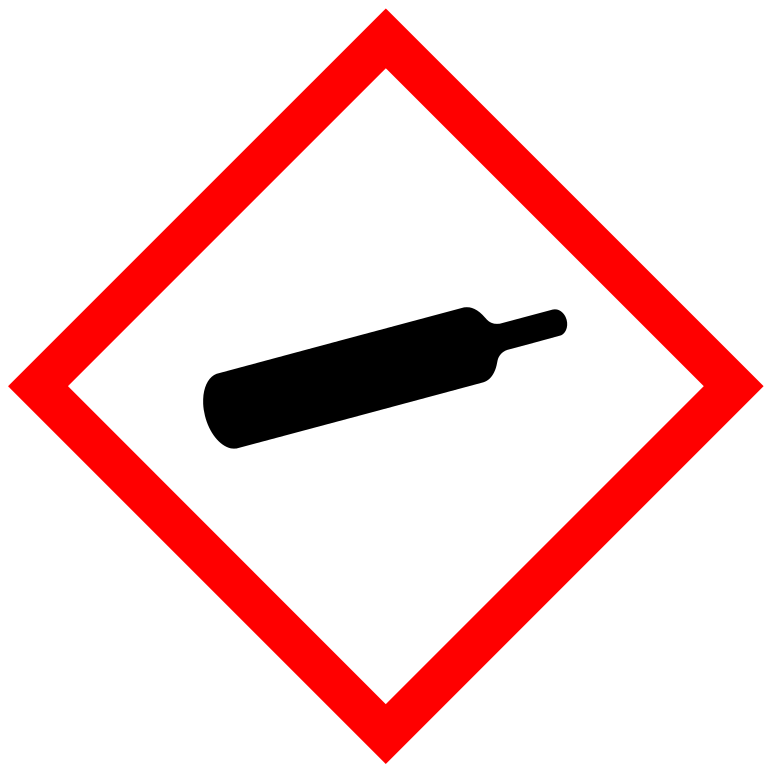
GHS04 · Gas under pressure
Hazard class
asphyxiant (simple asphyxiant at high %, physiological effects from ~1 vol%)
GHS signal word
Warning
CLP classification
Gases under pressure, liquefied gas; H280
Hazard statements
H280: Contains gas under pressure; may explode if heated.
TWA 5000 ppm (9000 mg/m3) ST 30,000 ppm (54,000 mg/m3)
OSHA PEL (USA)
TWA 5000 ppm (9000 mg/m3) See Appendix G
IDLH
40,000 ppm
// Limits change: always confirm the current national value before setting an alarm. Values above were read from the EU directives / GESTIS / NIOSH pages listed in Sources.
Effect on people
Not toxic in the classic sense but physiologically active: above ~1 vol% (10 000 ppm) breathing rate rises; 3–5 % causes headache, dizziness, acidosis; above ~8–10 % loss of consciousness within minutes; >20 % rapidly fatal. Heavier than air — pools in pits, tanks and cellars.
GESTIS main toxic effects: Acute:
Cold injuries from contact with extremely cold, liquified gas or dry ice,
effects to respiratory center, biotransformation, heart/circulatory system and CNS due to massive inhalation
Chronic:
Effects to the CNS and heart/circulatory system
Recommended monitoring
NDIR is the standard method (strong 4.26 µm band, no chemistry). Fixed transmitters for fermentation cellars, CO₂ stores, greenhouses, breweries; IAQ (EPBD) at 400–2000 ppm; process 0–100 vol% with heated cell for wet biogas.
Alarm practice: 0.5 vol% (5000 ppm, 8-h OEL) pre-alarm, 1.5–3 vol% main alarm; sensor at 30–50 cm above floor (heavier than air).